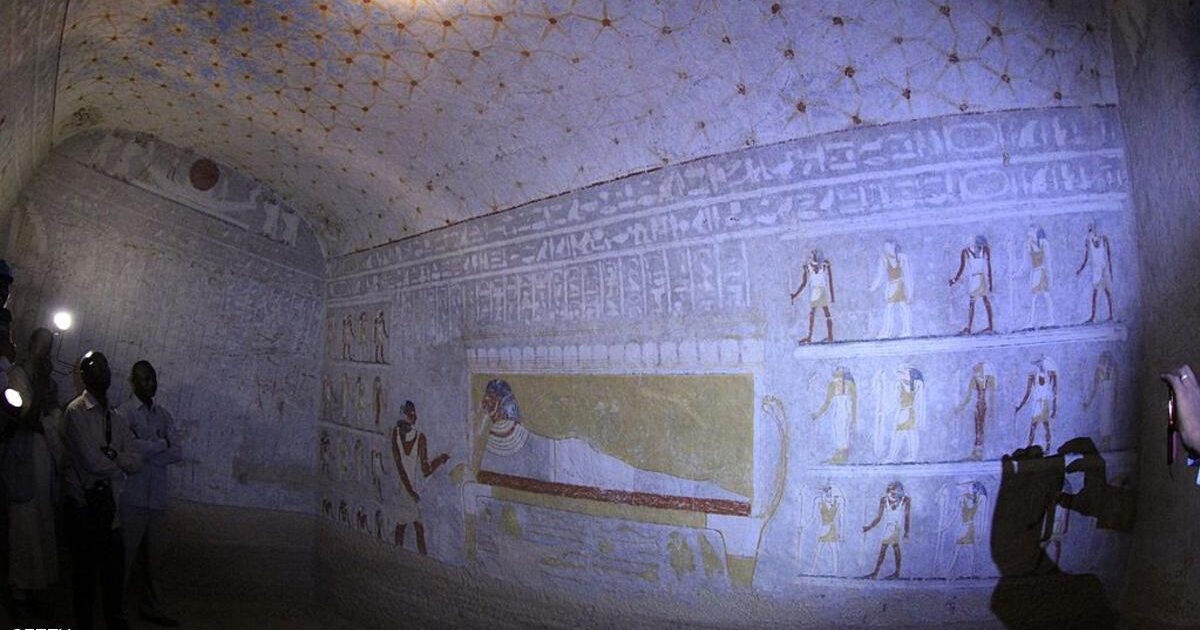
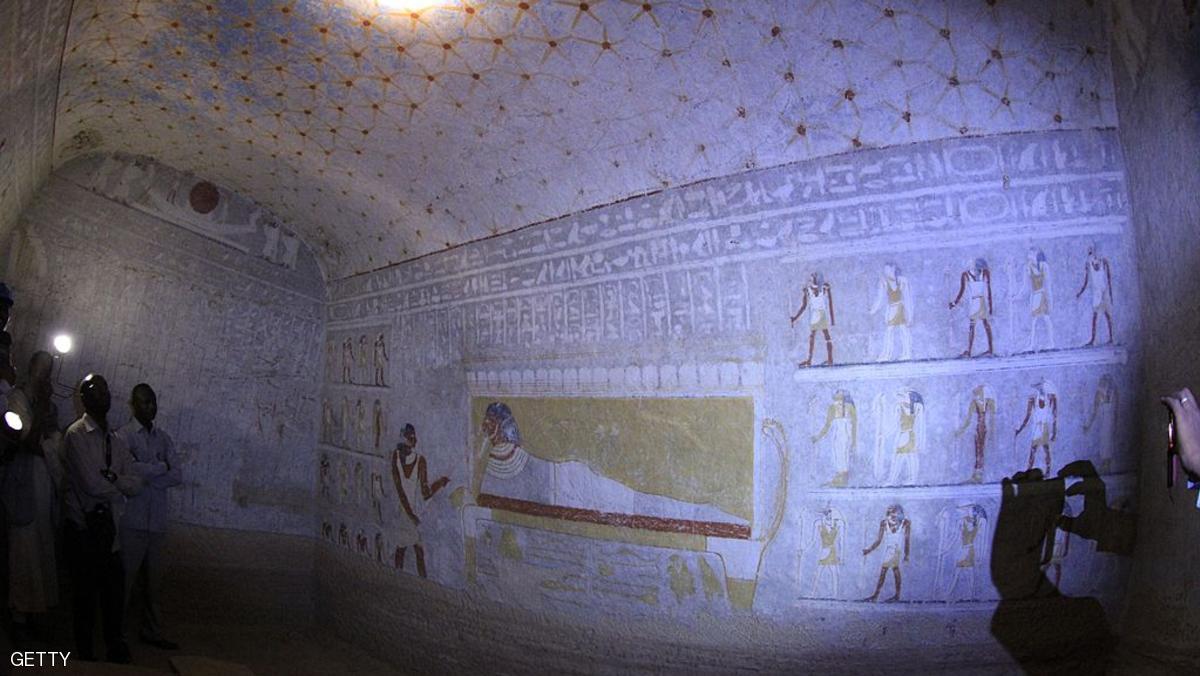
Hieroglyphics decorate a wall at the Al-Kuru archeological site, more than 300 kms northwest of the Sudanese capital Khartum on March 24, 2014. Teams from both Sudan's Dongola University and the USA's Michigan University have been excavating the site uncovering this season a temple with 23 interior columns. It is not yet known when the columns were built, but it is believed they are linked to a near by cemetery which contains some graves which appear to date from before the start of the Napatan kingdom in 750 BC, according to Abbas Zarook, head of the joint mission. There are also the remains of pyramids linked to the family of Napatas greatest king, Piankhi, whose tomb was recovered years ago by a different American archaeologist team. With financial support from Qatar, the Sudanese-American team is continuing to excavate the 17 pyramids. AFP PHOTO/ASHRAF SHAZLY (Photo credit should read ASHRAF SHAZLY/AFP/Getty Images)
أعلنت وزارة الاستثمار والسياحة السودانية، اكتشاف معبد أثري مكتمل، يرجع تاريخه لأكثر من ألفي عام قبل الميلاد بمنقطة جبل أم علي شمالي مدينة شندي.
وقال وزير الاستثمار والصناعة والسياحة بنهر النيل المهندس محمود محمد محمود: “إن مختصين أرجعوا تاريخ المعبد المكتشف لأكثر من (2000) عام قبل الميلاد، مضيفا: “يعد المعبد واحدا من آثار الحضارة المروية الضاربة في الجذور والقدم”.
وأفاد محمود بأن الدراسات الأولية تشير إلى وجود مدينة ملكية كاملة مقبورة داخل الأرض بموقع المعبد المكتشف، وتوقع أن تسهم هذه الاكتشافات في فك طلاسم الحضارة المروية،
ونقلت صحيفة “آخر لحظة” عن الوزير قوله: “اكتشاف المعبد الأثري تم بجهد وخبرات سودانية خالصة، عبر مركز أبحاث ودراسات الآثار بجامعة وادي النيل تحت إشراف أجهزتنا المختصة وبتمويل قطري”.
فريق التحرير في شبكة سودافاكس الإخبارية، المنصة الإعلامية الرقمية السودانية المستقلة التي تأسست عام 2012.يضطلع فريق التحرير بمتابعة الأحداث الجارية وتوثيقها لحظةً بلحظة، ويشمل ذلك الأخبار العاجلة والتقارير الإخبارية والبيانات الرسمية والمستجدات الميدانية في السودان والمنطقة العربية.
يعمل الفريق وفق معايير الصحافة المهنية القائمة على الدقة في النقل والتحقق من المصادر، تحت إشراف رئيس التحرير حسن بشير.